
International Package Shipping for Small Businesses
I once watched a perfectly harmless box of handmade goods turn into a tiny international incident because the customs description said, with great confidence and almost no usefulness, merchandise. The box did not appreciate this vague little costume. Customs did not appreciate it either. Everyone paused dramatically, which is exactly what you do not want a package to do after you have paid real money to send it across an ocean.
The good news is that small businesses and independent exporters can ship overseas without hiring a freight forwarder for every order. You need a repeatable system: choose the right carrier, describe the goods like a competent adult with a clipboard, assign values honestly, decide who pays duties, and make returns less mysterious before the customer is already annoyed. Glamorous? Not especially. Effective? Very.
Start With the Opportunity, Then Respect the Paperwork
International shipping is worth learning because the market is not a polite little add-on. According to the U.S. Small Business Administration, "Nearly 96% of consumers live outside the U.S., and two-thirds of the world's purchasing power is in foreign countries." That is the sort of sentence that makes a small business owner sit up straighter, then immediately wonder where the customs forms are hiding.
You do not need a freight forwarder to send typical small parcels overseas from the United States. For many ecommerce orders, samples, replacement parts, handmade products, books, accessories, and lightweight merchandise, you can buy postage or a courier label directly through USPS, UPS, FedEx, DHL, or a shipping platform. The carrier's label workflow usually generates the customs data, commercial invoice, and electronic transmission required for parcel clearance.
Still, the package is now crossing a border, not visiting a cousin in Ohio. That means the destination country wants to know what is inside, what it is worth, where it was made, why it is being sent, and who is responsible for taxes and duties. If your shipment is regulated, unusually valuable, going to a restricted destination, or part of a larger B2B export transaction, that is when a customs broker, export advisor, or freight forwarder stops being extra and starts looking like a very sensible grown-up in the room.
Carrier Comparison: USPS, UPS, FedEx, and DHL
There is no single cheapest and most reliable international carrier, which is inconvenient but honest. The best choice depends on package weight, destination, value, speed, tracking needs, and whether the customer will forgive a slower delivery in exchange for lower shipping. Some customers will. Some customers treat tracking updates like a serial drama and will notice every silence.
USPS is often the practical starting point for small, light, lower-value parcels. The USPS international shipping guide says USPS reaches more than 180 countries, with Priority Mail Express International offering 3-5 business day delivery to select locations and Priority Mail International offering 6-10 business day service with a maximum weight of 70 pounds. First-Class Package International Service can be useful for lightweight shipments, but it has a 4-pound maximum and a $400 maximum declared value.
UPS and FedEx usually cost more than postal options but give you stronger tracking, faster business services, and more robust customs tools. They are often better for higher-value products, time-sensitive shipments, B2B customers, and packages where a delivery delay would cost more than the postage savings. Their online tools prompt for HS codes, product origin, values, and commercial invoice details, which is helpful if you enjoy being reminded of every field you forgot.
DHL Express is a favorite for many international small-package shippers because cross-border express delivery is its home turf. It is rarely the bargain-basement option, but it can be excellent for Europe, Asia, and destinations where postal handoffs become slow or hard to track. If your product has a healthy margin and your customer paid for speed, DHL can be worth quoting.
A simple rule: use USPS for lighter, lower-value shipments when price matters most; compare UPS, FedEx, and DHL when speed, tracking, claims handling, or customs visibility matters more. And please, because Future You deserves kindness, test two or three carriers on your top destination countries before you promise delivery timelines on your website.
Customs Forms: What You Need and How to Fill Them Out
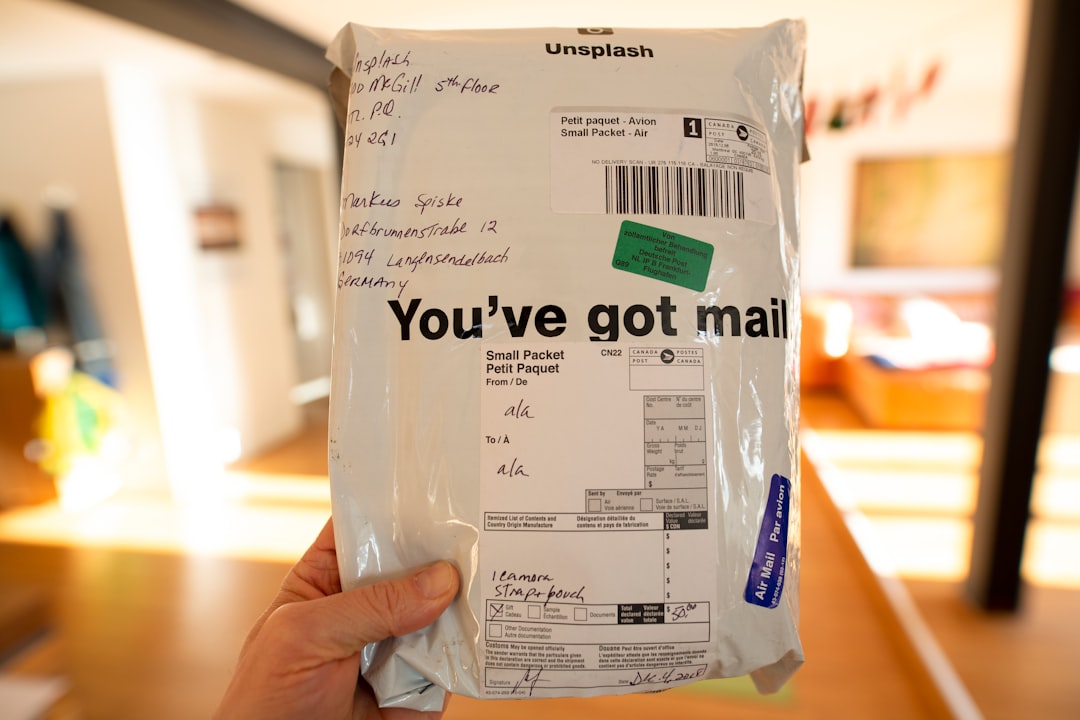
For small parcel exports, customs documentation usually means a customs declaration and, for commercial shipments, a commercial invoice. USPS explains on its customs forms page that customs forms are required for international packages except certain First-Class Mail International letters under 15.994 ounces that contain only nonnegotiable documents. In other words, if you are sending a product, assume paperwork.
USPS also gives the warning nobody wants taped to their packing table: "If you don't follow customs forms requirements, the customs officials in the receiving country may reject, return, or potentially even destroy your package." A little dramatic? Yes. Also motivating.
Here is the customs form routine I would put on a sticky note, if sticky notes did not immediately migrate under my keyboard:
- Use a specific product description. Do not write "clothes." Write "men's cotton shirts" or "girls' denim vest," the same kind of specific wording USPS recommends. Customs cannot classify your vibes.
- Enter the real quantity and value. Use the actual selling price or fair market value. Do not mark a sale as a gift to make duties disappear. That trick is not charming; it is a compliance problem wearing a fake mustache.
- List the country of origin. This means where the item was made or substantially transformed, not where you packed it while drinking coffee.
- Add an HS, Schedule B, or tariff code when required. The International Trade Administration explains that the Harmonized System is a standardized numerical method used globally to classify traded products and assess duties. The first six digits are internationally consistent across World Customs Organization member countries.
- Include recipient contact details. A phone number and email can help the carrier or customs office resolve duty payment or address questions before your package starts its tragic warehouse era.
- Generate forms electronically. USPS notes that international customs forms must be computer-generated, not handwritten, and the data is sent electronically to U.S. Customs and Border Protection.
For exports valued over $2,500 per Schedule B number, or items requiring an export license, the ITA says shipments generally must be reported in the Automated Export System. This is the point where you slow down and confirm the rule before shipping, because "I was just sending one box" is not a compliance strategy, however relatable it feels.
How Duties and Taxes Are Calculated
Duties and taxes are not charged because customs is in a mood. They are usually calculated by the destination country based on product classification, declared customs value, country of origin, and local tax rules. The HS code matters because it tells customs what the product is. The value matters because many duties and taxes are applied as a percentage of that value, sometimes with freight and insurance included depending on the country's rules.
The ITA notes that HS codes help determine import tariff rates and whether a product qualifies for preferential treatment under a free trade agreement. This is why copying a random code from a competitor, supplier, or ancient spreadsheet is such a bold little gamble. If the classification is wrong, the duty calculation can be wrong, and the package may be delayed while someone in a customs office wonders what exactly you meant by "accessory."
For customer experience, decide before checkout who pays import costs. If the buyer pays at delivery, the order may look cheaper upfront, but the customer can get a surprise bill and refuse the package. If you collect and remit duties upfront through a delivered-duty-paid service, the checkout total is higher but cleaner. Neither path is morally superior; one is just messier at the doorstep.
Your product page, checkout page, and order confirmation should say plainly whether duties, taxes, and brokerage fees are included. This single sentence can prevent an astonishing amount of inbox theater.
Incoterms for Small Package Exports
Incoterms sound like something invented to make normal people feel underdressed, but they are simply standardized rules that define who is responsible for costs, risks, transport, customs formalities, and insurance. The International Trade Administration's Incoterms guide explains that Incoterms 2020 includes 11 internationally recognized rules. Seven apply to any mode of transport, including EXW, FCA, CPT, CIP, DAP, DPU, and DDP.
For small package exports, you will usually be choosing between practical versions of DAP and DDP. Under DAP, the seller gets the package to the named destination, but the buyer is responsible for import duties and taxes. Under DDP, the seller bears the costs and risks including import duties. DDP is smoother for consumers because the package arrives without a surprise customs bill, but it requires your systems and carrier service to support duty collection and remittance.
For most small ecommerce sellers, my bossy-but-not-too-bossy recommendation is this: use DAP when you are still testing a market, margins are thin, or buyers are business customers who expect to handle import charges. Use DDP when you sell direct to consumers in a market that matters to you and you can price the landed cost properly. Put the chosen term on the commercial invoice and in your customer-facing shipping policy. Whispering it spiritually over the box does not count.
Returns, Delays, and Other Tiny Goblins
International returns need a policy before they need a label. Decide which items can be returned, who pays return postage, whether duties and taxes are refundable, and whether you offer refunds, store credit, or replacement shipments for refused packages. If the outbound shipment was DDP, check whether your carrier or tax provider supports duty drawback or refund processes. If it was DAP and the customer refused to pay duties, state whether original shipping is refundable. This is not unkind; it is how everyone avoids interpretive dance later.
Common mistakes that delay international packages are wonderfully boring, which is why they are so easy to prevent. Vague descriptions, undervalued goods, missing country of origin, wrong HS codes, incomplete addresses, no recipient phone number, restricted items, and handwritten or mismatched paperwork all invite customs delays. The package may still arrive, but it may arrive with the energy of someone who took the scenic route against their will.
Use the free tools before you pay for complicated ones. USPS offers Click-N-Ship, Customs Forms Online, an HS Code Lookup tool, and business shipping software that can create labels, customs forms, postage statements, and manifests. The USPS international business shipping page also notes that its Global Shipping Software helps businesses with export screening and documentation. The SBA, meanwhile, points exporters toward U.S. Export Assistance Centers and programs such as STEP and export working capital support, which can be useful once international orders stop being occasional and start becoming a real channel.
Conclusion: Make the Border Boring
The best international shipping process is not heroic. It is boring in the most profitable way: clear carrier rules, accurate customs descriptions, honest values, correct HS codes, visible duty terms, and a returns policy written before anyone is irritated. Start with one or two destination countries, compare USPS against UPS, FedEx, and DHL, and build a checklist you use every single time.
International customers are out there in enormous numbers, and many of them would happily buy from a small U.S. business if the delivery experience feels trustworthy. Give the box good paperwork, give the customer clear expectations, and give yourself the small mercy of not improvising customs forms at 11:42 p.m. Ship the package like you expect it to arrive. That is the whole trick.